


General info
Comparing Type 1 Diabetes Screening Options: Which Is Right for You?
If you're concerned about Type 1 diabetes (T1D) risk, you have several screening options available. Each program has different eligibility requirements, costs, and benefits. This guide helps you understand the differences and choose the best option for your situation.
%20(1).png)

Quick Comparison Table
Understanding Each Option
TrialNet: Research-Based Screening for Families
Who It's For: If you have a family member with Type 1 diabetes, TrialNet offers comprehensive free screening and access to prevention studies.
Key Features:
- Completely free screening and monitoring
- Tests for 5 autoantibodies (most comprehensive)
- Access to cutting-edge prevention studies if you test positive
- International network of expert researchers and clinicians
- Regular monitoring for those with positive results
Limitations:
- Requires family history (specific age/relationship criteria)
- No retesting allowed once you've completed screening
- Research participation required (data sharing)
- Must follow research protocols and timelines
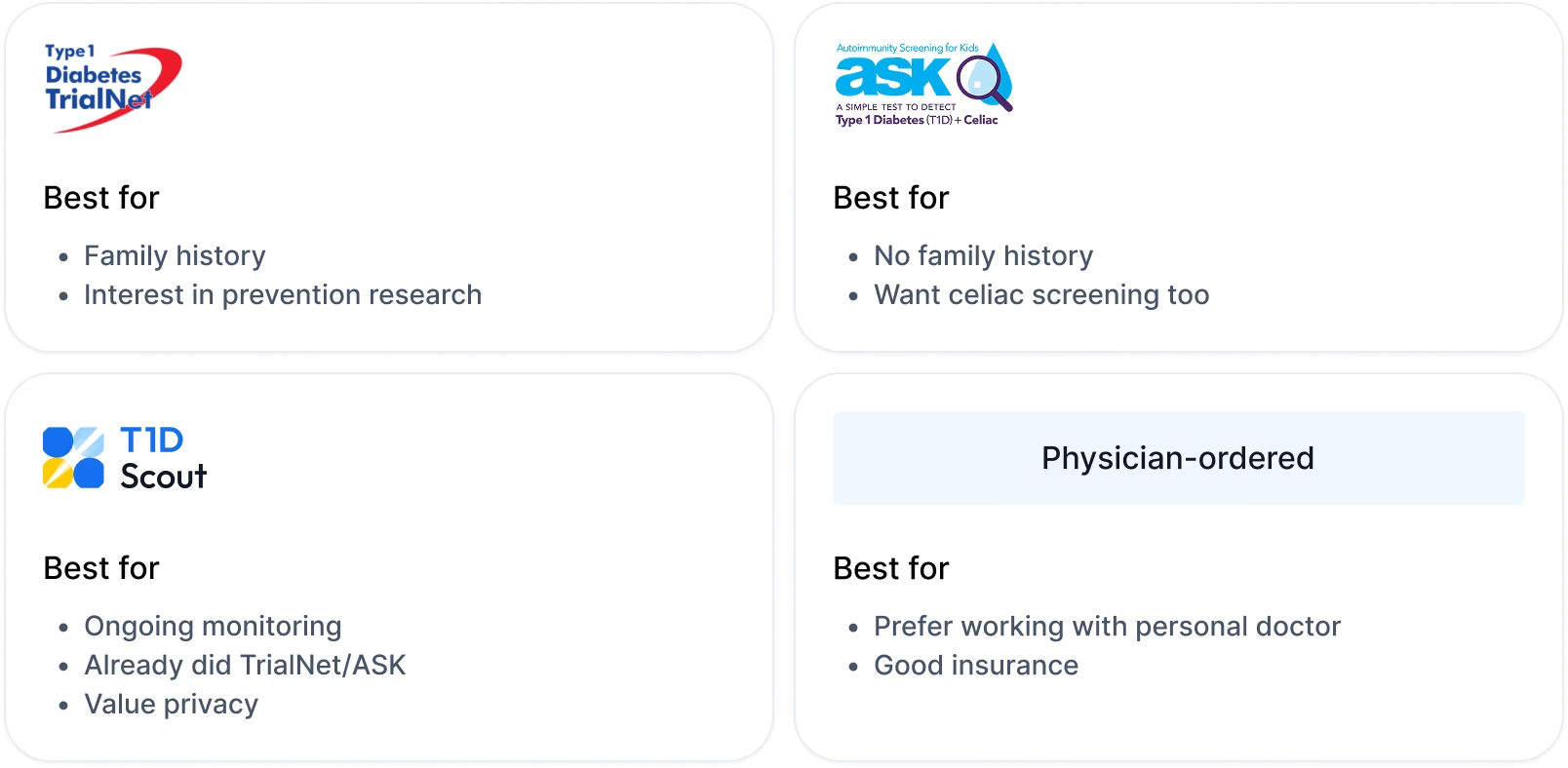
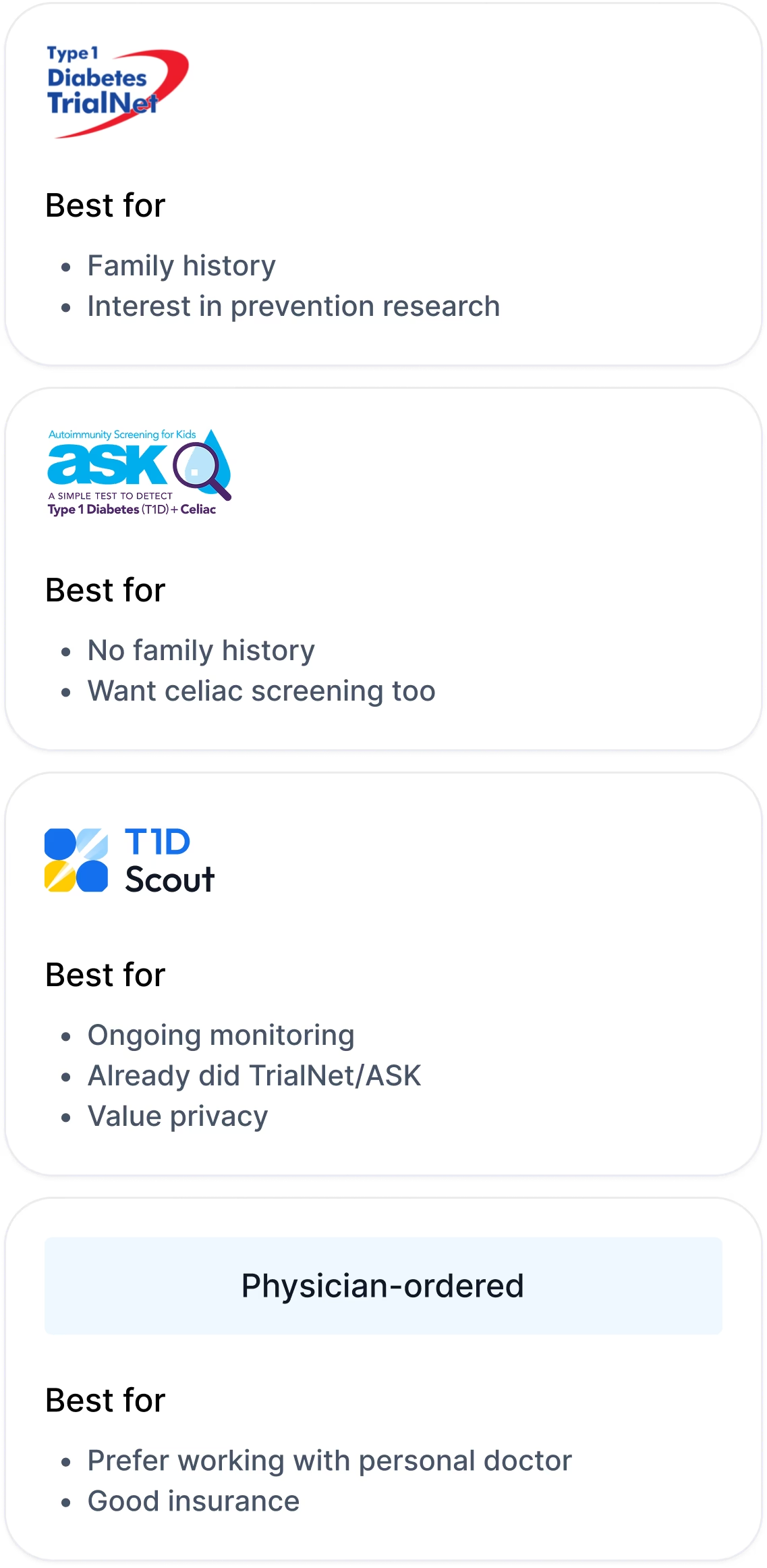
Best Choice If: You have family history, want to contribute to T1D research, and are interested in participating in prevention studies.
Learn more: How to Take TrialNet Screening →
ASK: Universal Screening for Everyone
Who It's For: Anyone aged 1-99 in the United States, regardless of family history. ASK removes barriers to early detection.
Key Features:
- Completely free screening
- No family history required (open to everyone)
- Tests for both T1D autoantibodies AND celiac disease
- At-home kit or lab testing options
- Simple, accessible process
Limitations:
- No retesting allowed once you've completed screening
- Research participation required (data sharing)
- Limited ongoing monitoring compared to other options
- Fewer autoantibodies tested (4 vs. 5)
Best Choice If: You don't have family history but want screening, or you want celiac disease screening included at no cost.
Learn more: How to Take ASK Screening →
.avif)
T1D Scout: Consumer Platform with Unlimited Testing
Who It's For: Families who want a consumer product (not a research program) with ongoing support and unlimited testing capability.
Key Features:
- DNA-based risk assessment ($129) + autoantibody testing
- FREE autoantibody test if DNA shows high risk
- Unlimited AA testing - anytime, anywhere, regardless of how many tests taken
- Online portal to manage and track all test results over time
- Expert support team available for lifetime monitoring
- No research participation required (your data stays private)
- Family-focused consumer experience
Limitations:
- Upfront cost for DNA test ($129)
- Not covered by insurance (direct-to-consumer)
- Fewer autoantibodies tested (3-4 vs. 5)
- No access to prevention studies (clinical trials)
Best Choice If: You want flexibility to retest as needed, prefer a consumer product over research participation, value ongoing expert support, or have already completed TrialNet/ASK and want continued monitoring.
Unique Value Proposition: T1D Scout is the only option that allows unlimited repeat testing, making it ideal for families who want to monitor risk over time, especially during high-risk periods (childhood, puberty, pregnancy) or after initial screening shows early warning signs.
Physician-Ordered Testing: Clinical Pathway
Who It's For: Individuals who prefer working with their own healthcare provider and have insurance coverage.
Key Features:
- Ordered through your personal physician
- Often covered by insurance (low or no cost)
- Clinical pathway (not research)
- Results integrated into your medical records
- Ongoing relationship with your doctor for monitoring
Limitations:
- Requires doctor's visit and order
- Insurance coverage varies (may not be covered)
- May face delays in getting appointment/results
- Repeat testing depends on physician and insurance approval
- No specialized T1D monitoring support
Best Choice If: You have a strong relationship with your doctor, prefer the traditional clinical pathway, and have good insurance coverage.
Learn more: How to Order Autoantibody Tests Through Your Physician →

Decision Guide: Which Option Should You Choose?
Start Here: Answer These Questions
Question 1: Do you have a family member with Type 1 diabetes?
- Yes, and I'm ages 2-45 (parent/sibling/child) → TrialNet is your best free option
- Yes, and I'm ages 2-20 (extended family) → TrialNet is your best free option
- No family history → Go to Question 2
Question 2: Are you comfortable participating in research (data sharing)?
- Yes, OK with research → ASK offers free screening for everyone
- No, prefer consumer/clinical product → Go to Question 3
Question 3: Do you want the ability to test multiple times?
- Yes, want unlimited testing → T1D Scout is the only option offering this
- No, one-time screening is enough → Go to Question 4
Question 4: Do you prefer working with your own doctor?
- Yes, prefer my physician → Physician Order through your doctor
- No, direct-to-consumer is fine → T1D Scout for consumer experience
Understanding the Research vs. Consumer Distinction
Research Programs (TrialNet & ASK)
Advantages:
- Completely free
- Backed by leading research institutions
- Contribute to advancing T1D science
Trade-offs:
- Your data is shared for research purposes
- No retesting allowed (one-time screening)
- Must follow research protocols and timelines
- Less flexibility in when/how you test
Consumer/Clinical Options (T1D Scout & Physician Order)
Advantages:
- No research participation required
- Greater control and flexibility
- T1D Scout offers unlimited testing
- Private data (not shared for research)
Trade-offs:
- Not free (out-of-pocket or insurance-dependent)
- No access to prevention study trials
- Must pay for repeat testing (except T1D Scout unlimited model)
Special Considerations
Already Completed TrialNet or ASK?
If you've already completed screening through TrialNet or ASK and want ongoing monitoring, T1D Scout is your best option for continued testing. Since research programs don't allow retesting, T1D Scout's unlimited testing model fills this gap.
Multiple Children at Risk?
Families with multiple at-risk children may benefit from T1D Scout's model, as one DNA test plus unlimited autoantibody testing can be more cost-effective and convenient than coordinating multiple research program enrollments.
High-Risk Periods
T1D autoantibodies can develop during specific high-risk periods:
- Early childhood (ages 2-5)
- Puberty
- Pregnancy
- After viral infections
If you want to monitor during these periods, T1D Scout's unlimited testing provides the flexibility to test when it matters most.
Want to Participate in Prevention Research?
If you test positive and want access to clinical trials testing therapies to prevent or delay T1D, TrialNet is your best path. They offer direct access to prevention studies.
What Are Autoantibody Tests?
Before choosing a screening option, it helps to understand what's being tested.
Autoantibody tests detect specific proteins in the blood that indicate your immune system is attacking insulin-producing cells in the pancreas. These markers can appear months or even years before Type 1 diabetes symptoms develop, providing a crucial window for early intervention.
Common Autoantibodies Tested:
- GAD65 (Glutamic Acid Decarboxylase)
- IA-2A (Insulinoma-Associated Antigen-2)
- IAA (Insulin Autoantibodies)
- ZnT8A (Zinc Transporter 8)
- mIAA (micro-Insulin Autoantibodies) - tested by TrialNet
Interpreting Results:
- No autoantibodies: Low current risk (though risk can change over time)
- One autoantibody: Increased risk, monitoring recommended
- Two or more autoantibodies: Early-stage Type 1 diabetes (even without symptoms)
Making Your Decision
There's no single "best" screening option—the right choice depends on your individual circumstances:
- Family history and want free screening? → TrialNet
- No family history and want free screening? → ASK
- Want unlimited testing and ongoing support? → T1D Scout
- Prefer working with your doctor? → Physician Order
All four options provide valuable early detection. The most important decision is to get screened, regardless of which option you choose.
Next Steps
Ready to move forward? Click the links below to learn exactly how to participate in each program:
- How to Take TrialNet Screening →
- How to Take ASK Screening →
- Learn more about T1D Scout →
- How to Order Tests Through Your Physician →
Sources




%20(1).jpg)
